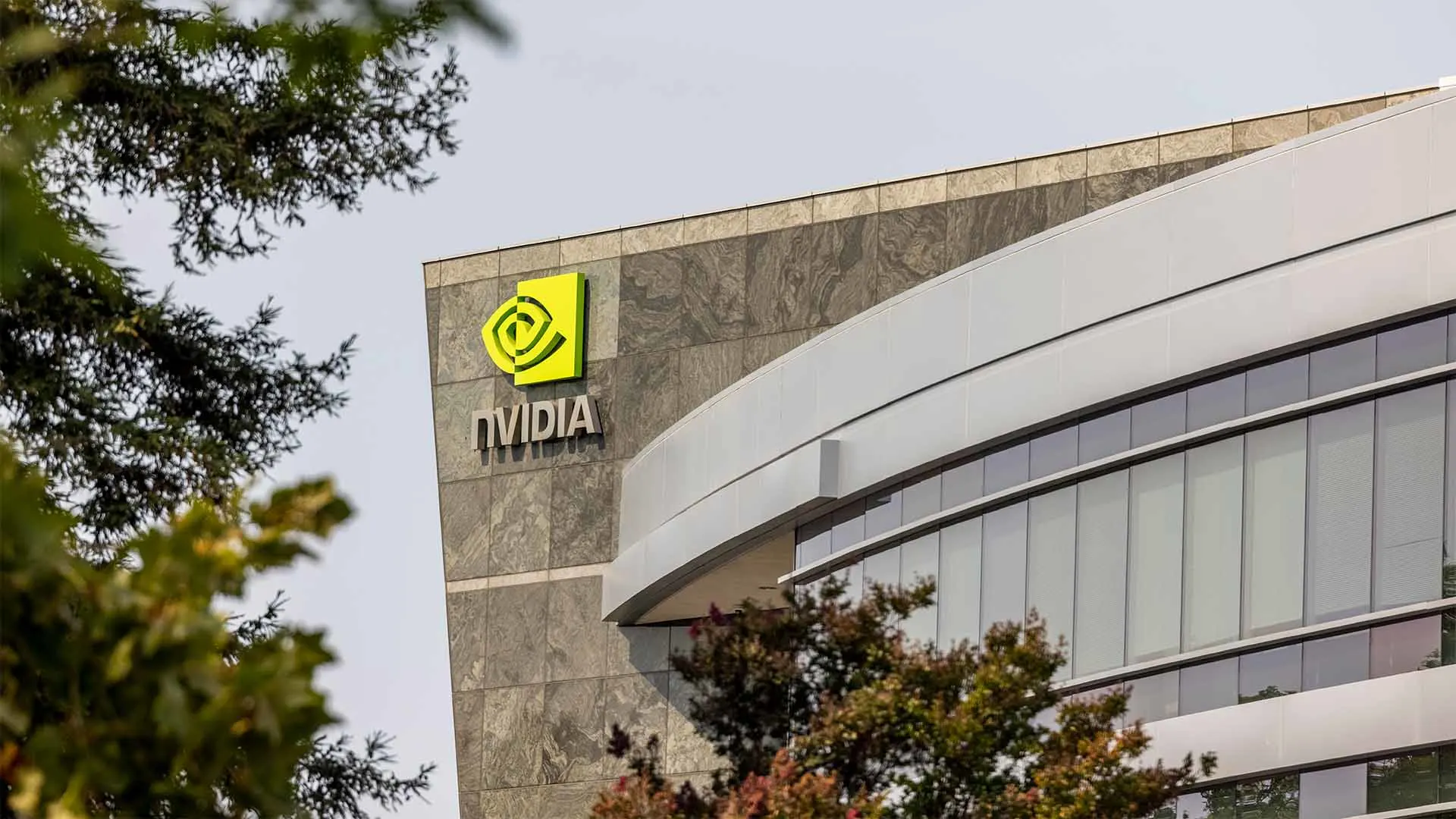
I want to talk about Nvidia today — not because it's a hot topic, not because everyone's suddenly an AI expert — but because studying Nvidia closely changed how I think about enterprise selling entirely.
When I was building the qualification logic behind ArakYet, I kept coming back to one question: what does a company look like right before it becomes impossible to ignore? Nvidia answered that question better than any framework I'd read.
Here's what I found when I stopped treating Nvidia as a headline and started treating it as a signal.
Start With the Address. Seriously.
The Nvidia head office is at 2788 San Tomas Expressway, Santa Clara, California 95051. That's the Nvidia company address most people know.
But Nvidia doesn't operate from one center of gravity anymore. They have engineering hubs across the US — Austin, Seattle, Redmond — plus significant international presence in Taipei, Tel Aviv, and Pune. The Nvidia company address in Santa Clara is where strategy lives. The rest is where execution happens.
Most teams map a company by HQ and stop there. That's lazy qualification. When I'm looking at a large enterprise as a target account, the first thing I want to know isn't where their HQ is — it's where they're growing. Those are different geographies. And they usually signal different buying centers.
Nvidia's campus expansion in Santa Clara, combined with new engineering offices in AI-heavy corridors, told me something useful: this company is scaling infrastructure, not just headcount. That's a different buying motion than a company scaling sales or marketing. Infrastructure growth means procurement, vendor relationships, and technical partnerships are all in motion.
Nvidia's Key Office Locations
- Santa Clara, CA — Global HQ. Strategy, product direction, executive leadership.
- Austin, TX & Redmond, WA — US engineering hubs. Infrastructure and cloud-adjacent teams.
- Taipei, Taiwan — Hardware design and supply chain proximity.
- Tel Aviv, Israel — Deep learning research and networking (Mellanox legacy).
- Pune, India — Engineering and enterprise software operations.
That's the kind of signal ArakYet is built to surface: not the static address, but what the address activity tells you.
Nvidia Careers Is One of the Most Underrated Research Tools I've Used
I spent an unreasonable amount of time on the Nvidia careers page while building ArakYet's signal model. Not to apply — to learn.
Nvidia careers listings are unusually specific. They don't just say "ML Engineer." They say which product area, which team, which technical stack, and sometimes which partner ecosystem they're building for. If you know how to read job descriptions as strategic documents, Nvidia's careers page reads like a product roadmap.
"If you know how to read job descriptions as strategic documents, Nvidia's careers page reads like a product roadmap."
What I noticed over a 6-month window:
| Hiring Signal Observed | What It Indicated | Timing |
|---|---|---|
| Heavy hiring in networking infrastructure | Networking story — before it went mainstream | Early Signal |
| Surge in enterprise software & cloud-adjacent roles | Shift from pure chip sales to full-stack enterprise | Directional |
| Internship volume in AI systems research | Outpaced most pure-play AI companies — serious pipeline investment | Leading |
What Nvidia Internships Signal About Long-Term Bets
Nvidia internships are competitive in a way that reflects how serious the company is about particular research directions. When a company of Nvidia's size starts pulling interns from specific PhD programs in specific sub-disciplines, that's not random. That's deliberate pipeline building.
The 12–18 Month Rule
I track internship patterns as a leading indicator. Early-stage hiring in a technical area precedes product investment by 12 to 18 months. Nvidia internships in quantum-adjacent research, in new chip architectures, in enterprise software tooling — these aren't filler programs. They're signals about where the company believes value will compound. For anyone selling into Nvidia's ecosystem or selling to companies that buy from Nvidia, this matters. The companies building on top of Nvidia's stack are going to need adjacent services, integrations, and tools. If you can see where Nvidia is investing before it's obvious, you can get to those adjacent buyers early.
If You're Trying to Sell to Nvidia, Read This Section First
Nvidia is one of the hardest enterprise accounts to break into cold. They're inundated with vendors, their procurement cycles are long, and generic outbound gets ignored at an industrial scale.
I've seen teams waste six months trying to get a foot in the door at Nvidia because they were pitching to the wrong office, the wrong team, and at the wrong time. The problem wasn't the product. It was the qualification.
Here's what actually changes the odds — and what ArakYet is specifically built to do for accounts like this:
- Map the org by function, not just by HQ. The Nvidia company address in Santa Clara is not where your deal lives. Depending on what you're selling, your buyer is sitting in Austin, Taipei, or Pune. ArakYet's signal layer helps you identify which offices are actively hiring in adjacent functions — that's where budget is moving.
- Use the Nvidia careers page as a timing signal. When Nvidia posts a cluster of roles in a specific product area, that team is about to receive headcount and budget. That's your entry window — 60 to 90 days before the team is fully staffed and locked into existing vendor relationships.
- Watch what Nvidia internships are focused on this cycle. Internship programs signal 12 to 18 months of future investment direction. If internships this year concentrate in enterprise software or a specific hardware domain, vendors adjacent to that domain will see accelerated buying activity.
- Don't ignore Nvidia Reddit as a sentiment layer. Before you write your first outreach sequence, spend time in r/nvidia and r/MachineLearning. Understand what their engineers actually complain about. What tooling frustrates them. What competitor products they're benchmarking. That context makes your outreach feel like it was written by someone who understands their world.
"The difference between a team that cracks Nvidia and one that doesn't usually comes down to one thing: the winning team treated Nvidia like a research project before they treated it like a sales target."
Nvidia Reddit Is Where Real Sentiment Lives
An unpopular opinion: Nvidia Reddit communities taught me more about actual buyer sentiment than most analyst reports.
Subreddits like r/nvidia and r/MachineLearning carry the kind of ground-level signal that doesn't show up in press releases. Product frustrations. Driver complaints. Genuine excitement about specific chip capabilities. Enterprise users comparing Nvidia against AMD in real workloads, not benchmarks.
Reddit threads carry real product feedback from engineers with specific use cases. These aren't anonymous opinions — they're professionals talking openly about real deployment problems.
Driver issues, CUDA limitations, enterprise support complaints — the gap between official documentation and actual user experience shows up clearly in community threads.
The gap between what a company publishes and what its users say on Nvidia Reddit is where the real ICP research happens. ArakYet pulls from community and web signals for exactly this reason. Structured data tells you what happened. Community signals tell you what people actually think about it.
Lesson: Nvidia Is an ICP Benchmark, Not Just a Case Study
Here's what studying Nvidia for ArakYet's qualification model actually taught me.
A company becomes an ICP benchmark when it consistently shows you the gap between how enterprises say they buy and how they actually buy.
Nvidia grew from a gaming GPU company to the backbone of enterprise AI infrastructure. That didn't happen because sales teams had good pitches. It happened because the market shifted and Nvidia's signals — hiring, product direction, internship investment, community traction — were visible to anyone paying attention.
The Teams That Won Got There Early By Reading Signals
- Hiring patterns — where headcount is clustering tells you where budget is moving
- Internship investment — 12–18 month leading indicator of product direction
- Community traction — real sentiment that predates analyst consensus by months
- Campus & office expansion — infrastructure growth signals procurement motion, not just headcount
The teams that got to Nvidia early — that built partnerships and integrations before the AI wave was obvious — were reading those signals. They weren't smarter. They were more systematic.
That's what I want for every team using ArakYet. Not better guessing. Just better reading.
"Most outbound today is built on who a company was six months ago. The Nvidia story is a reminder that the accounts worth winning are defined by where they're going — and that's always visible in the signals before it's visible in the news."
FAQs
The Nvidia head office is located at 2788 San Tomas Expressway, Santa Clara, California 95051, USA.
Nvidia has offices in Austin (Texas), Redmond (Washington), Taipei (Taiwan), Tel Aviv (Israel), and Pune (India), among others. Each hub reflects a specific functional or regional focus. See Nvidia's careers page for current active hiring locations.
Nvidia careers pages reveal hiring patterns by team and technology area, which act as leading indicators of where the company is investing next. Useful for anyone selling into or alongside the Nvidia ecosystem.
Nvidia internships in specific research areas tend to precede product investment by 12 to 18 months. They're a reliable early signal of where the company sees future value.
Yes. Communities like r/nvidia and r/MachineLearning carry real buyer sentiment, product feedback, and procurement discussions that don't appear in official channels. It's one of the most underused sources for ICP and competitive research.
ArakYet maps Nvidia's org by hiring signals, identifies which offices and teams have active budget movement, and surfaces community sentiment — so your outreach is timed correctly, targeted to the right function, and grounded in what Nvidia is actually building right now.
Stop Guessing Where Your Deal Lives. Start Tracking the Signals.
Nvidia's buying centers aren't in one building. Your ICP isn't in one CRM row. ArakYet maps enterprise orgs by hiring signals, identifies active budget movement across offices and functions, and surfaces community sentiment — so your outreach lands at the right team, at the right time.
Not better guessing. Just better reading.
Try ArakYet Now →